• Latest update: September 23, 2026
We Tested 47 Sleep Supplements To Find The One That Stops the 3 AM Wake-Up
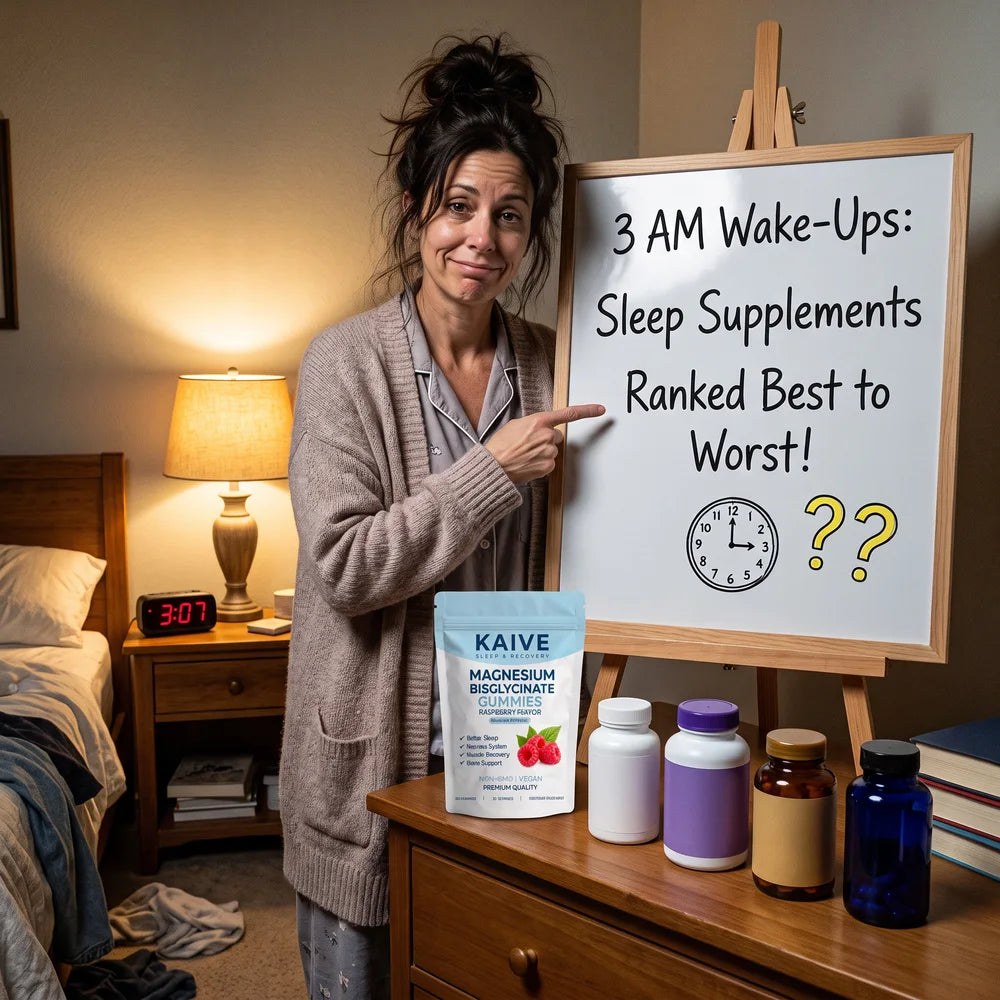
Falling Asleep Was Never Your Problem. Staying Asleep Is.
You know the routine by heart. Lights out at a reasonable hour. You fall asleep — that part's fine. Then somewhere between 2 and 4 AM, your eyes open like someone flipped a switch. You check the time. You do the math on how many hours are left. You try the breathing exercise. You check the time again. Eventually the alarm ends the negotiation, and you drag through another day on caffeine and willpower — and that night, it happens again.
You've tried the whole list: melatonin, no caffeine after noon, blue-light glasses, the white-noise machine, the cold room, the sleep podcast. Nothing touched it. Here's why: none of those address what's actually happening in your body at 3 AM.
Your magnesium levels decline overnight as your body uses them. If you're already running low — and most people are — your reserves run out mid-night. Below a certain threshold, your nervous system loses its grip on deep sleep. Cortisol spikes. Adrenaline follows. Your brain reads that as a wake-up signal — and it fires at roughly the same point every night, because the depletion curve is the same every night. It's not random. It's not stress. It's biochemistry on a schedule.
This is also why melatonin never fixed it: melatonin governs sleep onset — falling asleep. It does nothing for sleep maintenance — staying asleep. If you fall asleep fine and wake at 3, melatonin was never going to help you. Magnesium addresses the staying-asleep mechanism directly.
So we tested 47 sleep supplements against one brutally specific question: does the 3 AM wake-up stop? Here's how we graded them, and the one that won.
How We Graded All 47 of Them
1. Absorption (the form)
This is 80% of the game. Oxide absorbs at roughly 4% — it's in most bottles because it's cheap, not because it works. Bisglycinate (magnesium bound to two glycine molecules) is carried through the gut wall and absorbed at multiples of that. Any product built on oxide started with a failing grade.
2. Format (will you actually take it nightly?)
Results come from consistency, and consistency dies on giant capsules and chalky drink mixes. The best form of magnesium is the one you're still taking in month three.
3. Results in the first 30 nights
Falling asleep faster, fewer middle-of-the-night wake-ups, settled legs, clearer mornings — reported by real nightly users, not the label.
4. Tolerance (your stomach votes too)
Oxide and citrate are famous for digestive drama. A supplement you dread — or one that sends you to the bathroom — doesn't survive week two.
5. Label honesty
Elemental magnesium clearly stated. No proprietary blends. No melatonin smuggled into a "magnesium" formula. Third-party testing on every batch.
Before the Rankings: Red Flags vs. Must-Haves
Avoid Anything With
- Magnesium oxide anywhere in the ingredient line
- "Proprietary blend" hiding the actual doses
- Melatonin quietly added to a magnesium formula
- "Glycinate" on the front, oxide blend on the back
- Sugar-loaded gummies (a sugar spike at bedtime)
- Horse-pill capsules you'll quit by week two
- No third-party testing
- Under 100mg elemental magnesium per serving
Insist On
- Pure magnesium bisglycinate — nothing else
- 200mg elemental magnesium per serving
- Sugar-free (stevia-sweetened is fine)
- Third-party tested, every batch
- A format you'll genuinely take every night
- Gentle on an empty stomach
- Transparent elemental dosing on the label
- A real money-back guarantee
The Rankings

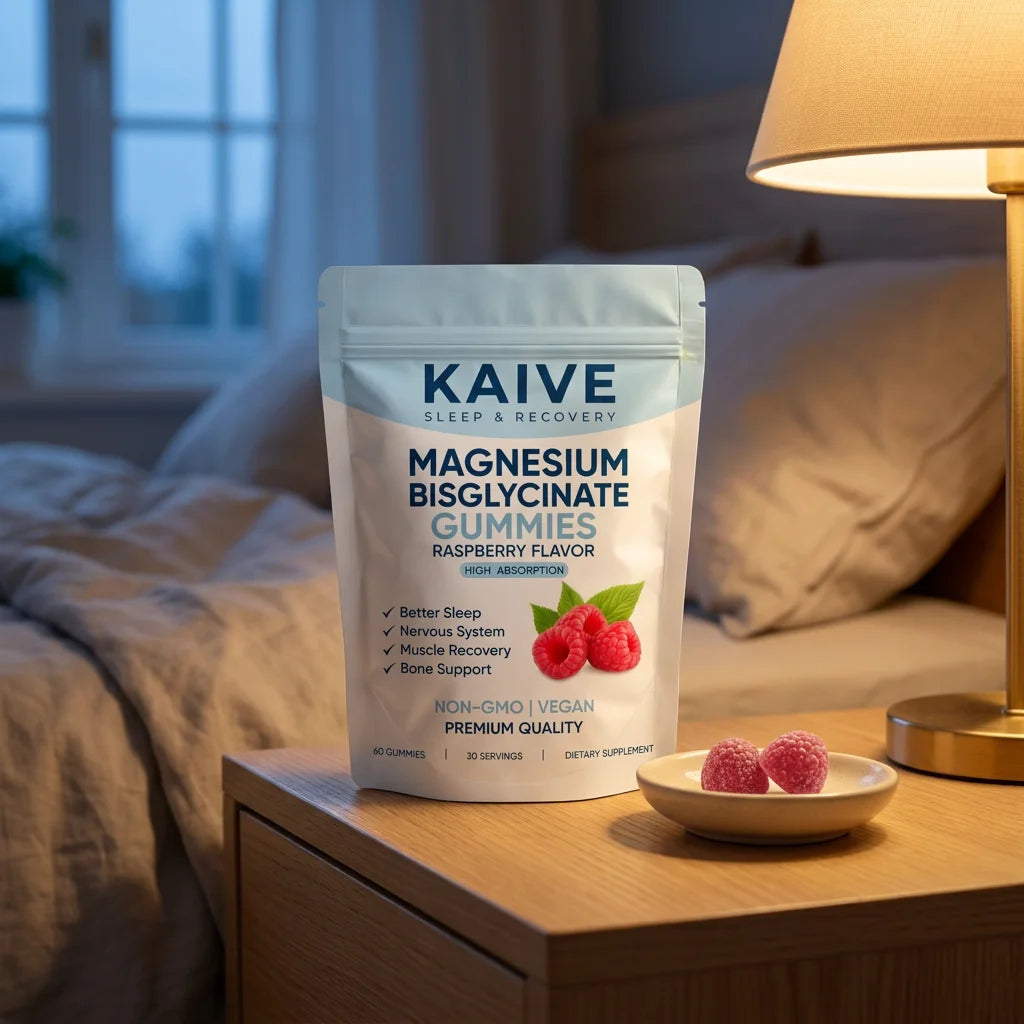
Kaive Magnesium Bisglycinate Gummies
Pure bisglycinate · sugar-free raspberry gummies · 200mg elemental per 2-gummy serving
A+Kaive was the only product in our test that checked every single box: pure bisglycinate with zero oxide anywhere in the formula, a full 200mg elemental dose, sugar-free, third-party tested every batch — and, decisively, a format people actually stay consistent with. Two raspberry gummies before bed is a ritual; four horse pills is a chore.
The consistency point matters more than it sounds. In our 30-night trials, the products that "worked" were the ones people were still taking at night 30 — and Kaive had the highest compliance of anything we tested, by a wide margin. It's the only one testers asked to keep.
- Fall asleep faster and stay asleep through the night
- No melatonin — nothing habit-forming, no groggy mornings
- Gentle on the stomach (the whole point of the glycine)
- Settles restless legs and nighttime cramps
- Vegan, pectin-based, non-GMO, stevia-sweetened
Pros
- The correct form, at a real dose
- Highest tester compliance of the whole field
- Sugar-free and genuinely pleasant to take
- 30-night money-back guarantee
- Summer Sale pricing — from $34.95/pouch with Subscribe & Save
Cons
- Frequently sells out — restocks take weeks
- Online only (not in stores)
"Three weeks in and I'm not doing mental laundry at 1am anymore. I keep waiting for it to stop working. It hasn't."
— Verified Kaive customerFinal thoughts: the rare case where the winner isn't close. Right form, right dose, and the only one you'll still be taking in month three — which is the entire game.

SereniMag Glycinate Capsules
The right form — in the wrong format
B+Credit where due: SereniMag uses genuine bisglycinate and doses it honestly. Chemically, it's a solid product. Practically, it's a commitment: four large capsules per serving, best taken with food, in a bottle that lives in a cabinet you'll stop opening.
Pros
- Real bisglycinate, honest label
- Solid elemental dose
Cons
- Four large capsules per serving
- Tester compliance fell off by week two
- No money-back guarantee
Final thoughts: if you're a disciplined pill-taker, this works. Most people aren't, and the bottle half-full in month two doesn't help anyone sleep.
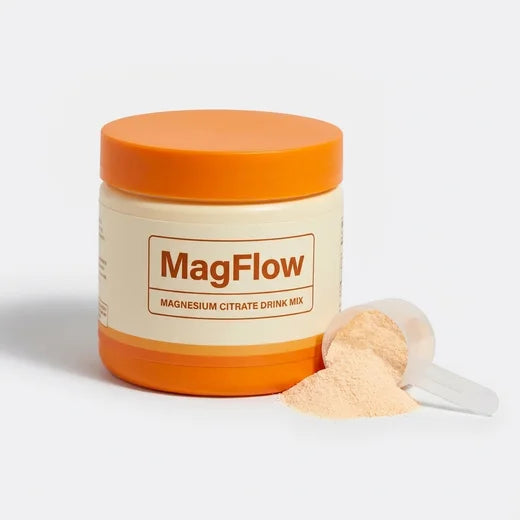
MagFlow Citrate Drink Mix
Decent mineral, demanding ritual
BCitrate absorbs reasonably well, and the warm-drink ritual is genuinely calming — when you do it. But the taste divides people, a full dose sends some straight to the bathroom, and "boil water, stir, sip" is a lot to ask of someone who's already exhausted at 10pm.
Pros
- Acceptable absorption
- The ritual can aid wind-down
Cons
- Laxative effect at the doses that work
- Taste fatigue is real
- Falls apart on travel and tired nights
Final thoughts: a fine second supplement for citrate fans. As your nightly driver, the friction wins eventually.
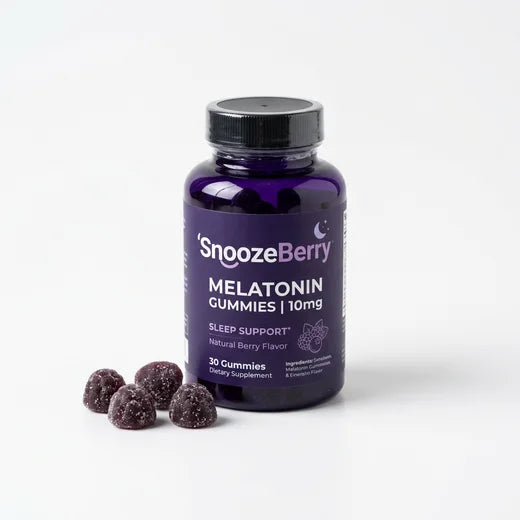
SnoozeBerry Melatonin Gummies
Works on night one. That's the problem.
C+The classic melatonin experience: impressive first week, groggy mornings, then diminishing returns as your body downregulates its own production. It also does nothing for staying asleep — melatonin governs sleep onset, not sleep maintenance. Add 3g of sugar per serving at the worst possible time of day, and the grade writes itself.
Pros
- Fast sleep onset, first uses
- Cheap and everywhere
Cons
- It's a hormone, not a nutrient
- Groggy "hangover" mornings
- Tolerance and dependency over time
- Useless for 2–4 AM wake-ups
Final thoughts: if you're here to quit melatonin, this is what you're quitting. If you're not — read the cons list twice.
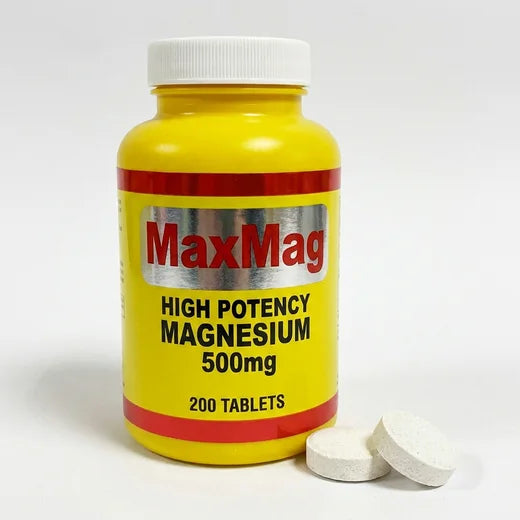
MaxMag "High Potency" Oxide Tablets
The bottle that convinced you magnesium doesn't work
C-The drugstore classic. "High potency" on the front, magnesium oxide on the back — the form that absorbs at roughly 4% and upsets your stomach on the way through. If you've ever "tried magnesium and felt nothing," there's a decent chance it was this bottle or one of its cousins.
Pros
- Cheap
- Big number on the label
Cons
- Oxide: barely absorbed
- Digestive upset is the norm
- The big number is the unabsorbed kind
Final thoughts: this bottle has done more damage to magnesium's reputation than any other product category. Skip.
FAQ Section
What makes bisglycinate better than other forms of magnesium?
It's magnesium bound to two glycine molecules — a calming amino acid your gut readily absorbs. The glycine carries the mineral through the gut wall, so far more of it actually arrives, and it's gentle enough to take every single night. Glycine also supports GABA, your brain's own off-switch, in its own right.
Is it safe to take magnesium every night?
Bisglycinate is well-tolerated for nightly use, and consistency is where the results come from. As with anything new, if you're pregnant, nursing, taking medication, or managing a condition, check with your doctor first.
Will it knock me out like melatonin?
No — and that's the point. Magnesium isn't a sedative. It supports your body's own wind-down process instead of forcing sleep on it. Nothing habit-forming, no morning fog.
How fast will I notice a difference?
Many people notice bedtime feeling calmer within the first week. The deeper changes — fewer middle-of-the-night wake-ups, settled legs, clearer mornings — typically build over 2–4 weeks of nightly use as your levels rebuild.
Why don't deficiencies show up on my blood work?
Standard panels measure serum magnesium, which reflects roughly 1% of your body's total stores. Your labs can read "normal" while your reserves run low — which is why the symptom cluster is often a better signal than the blood test.
Are Kaive gummies really sugar-free?
Yes — sweetened with stevia, built on fruit pectin (never gelatin), vegan and non-GMO. No sugar spike at the worst possible time of day.
How much should I take?
Two gummies about 30–60 minutes before bed — 200mg of elemental magnesium. That's the whole protocol. Same time each night works best.
What if it doesn't work for me?
Kaive covers every order with a 30-night money-back guarantee. Take them nightly for up to a month; if your nights aren't better, one email refunds every penny. No return shipping, no questions.
Kaive Magnesium Bisglycinate Gummies
"I wish I had found this before I spent years blaming myself for bad sleep."
- ✅ Pure bisglycinate — the form your body actually absorbs
- ✅ Sugar-free raspberry gummies, just 2 before bed — no melatonin
- ✅ From $34.95 per pouch with Subscribe & Save 20%
- ✅ 30-night money-back guarantee — one email, no return
Sell-out Risk: High — often out of stock due to demand; Summer Sale pricing while it lasts.